 WARRANTY OWNERSHIP
The shop
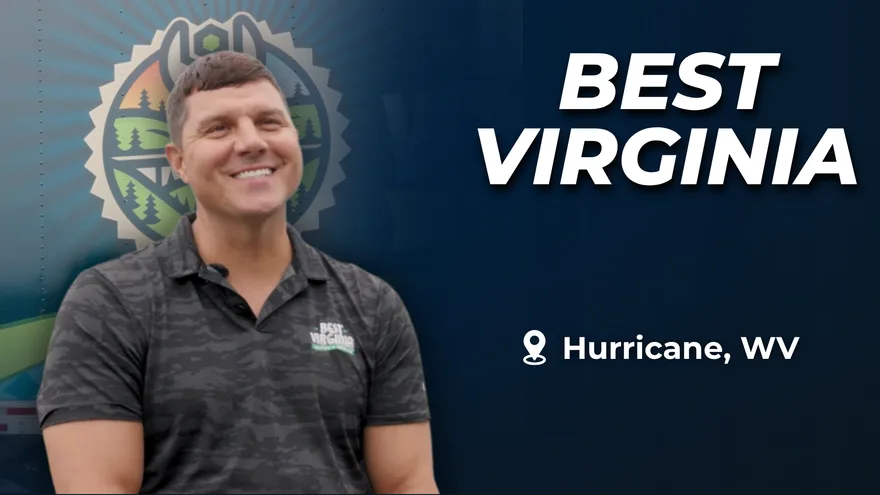
Best Virginia runs out of Hurricane, West Virginia — Hurri-kin, if you’re local — on a twenty-five mile radius that reaches Huntington one way and Charleston the other.
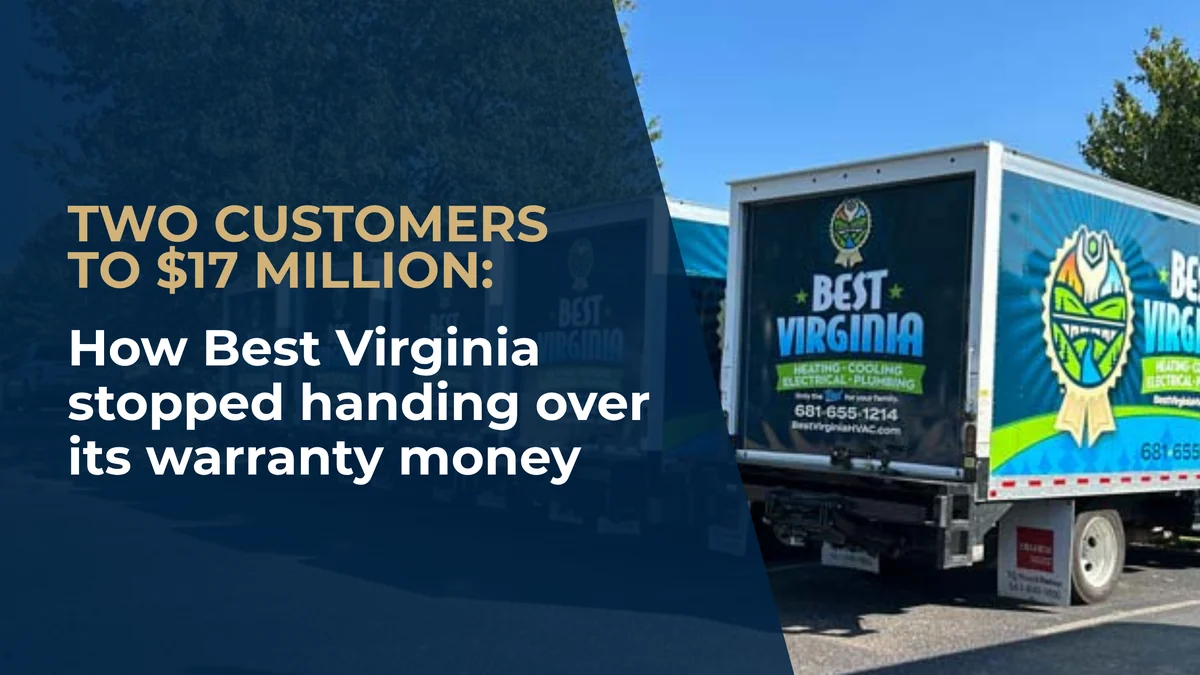
John got into the trades in 2007 knowing nothing about them, because an uncle gave him a shot. He started Best Virginia in March 2022 with two customers: his grandfather and his mother. He didn’t charge either of them.
Then it grew about as fast as a home-services business can grow.
- First ten months: $3M
- Year two: $7M
- 2024: $13M
- 2025: $17M
He built the company around taking care of the crew first, which is worth noting because it explains the decision he made later. A shop growing that fast has one scarce resource, and it isn’t money.
“The greatest asset in life is time. This frees us up in every way.”
What he was doing before
Like most shops selling warranties, Best Virginia ran somebody else’s program. John has tried more than one of them — he refers to them as “the big guys that have been out there for years.”
The problem wasn’t the price. It was what happened when a customer needed the thing they’d bought.
“Before — all the paperwork, get rejected, claims not processed right by the other people.”
Read that again, because it’s the part most owners underestimate. The friction didn’t land on the warranty company. It landed on his crew, in front of his customer, on a job his people had done. His name was the one on the sticker. Somebody else’s process was the one failing.
For a shop adding millions in revenue a year, that’s not an inconvenience. It’s a tax on the scarcest thing he has.
What changed
At the start of 2024, Best Virginia moved to a program the company owns.
The setup was the part John expected to be painful, and wasn’t.
“The signup process with Conduit was incredibly easy. Fill out the form, scan it, send it back. I don’t know how it could get much easier.”
The bigger surprise was internal. Change in a fast-growing shop usually costs something in the field — a new process, a new system, somebody to convince.
“There’s not one person inside our company that’s ever not pleased.”
That’s because nothing changed for them. Same warranty conversation at the kitchen table, same paperwork, same close. What changed sat behind the sale, where a technician never has to look.
What it did
Two things, and the second one is the one nobody predicts.
The obvious one
“We’ve seen a massive lift in close percentage — and in the overall profitability of the company. Wouldn’t have it any other way.”
Two effects in one sentence, and they’re separate. Close rate moved because the quote got better — labour covered, a term Best Virginia sets, a person who answers. Profitability moved because the money customers pay for warranties stopped leaving the business.
The one he didn’t set out to build
John’s warranty requires the customer to keep up the manufacturer’s maintenance. Which means the warranty is the reason they stay on his maintenance plan.
“You’ve got to change the oil in your car, you’ve got to rotate your tires. It keeps the customer sticky to us. The greatest customer is the customer you already have.”
That’s not a warranty argument. That’s a recurring revenue argument — and recurring revenue is the single biggest lever on what a trades business is worth. He built one by accident, attached to a program he adopted for different reasons entirely.
What he says about it now
“I’ve tried the other guys. The ease of business with Conduit ten-X outweighs the difficulty with the big guys that have been out there for years.”
And on whether it’s a large-company thing:
“The car business has been doing this for seven thousand years. And we’re getting that now.”
That last one is worth sitting with. Every other industry that sells a durable product with a service tail figured this out decades ago. The trades were the last one still handing it away.
What another owner might take from this
Best Virginia isn’t a typical shop — very few businesses go from two customers to $17 million in four years. But the decision John made isn’t a fast-growth decision. It’s available to any shop with enough warranty volume to support it.
What his story does show is the order things happen in. He didn’t switch because of the money. He switched because the process was costing his people time and costing his customers patience. The money and the recurring revenue came with it.
Questions owners ask
Why do contractors switch away from third-party warranty companies?
Usually the claims process rather than the economics. The friction of getting a claim approved lands on the contractor’s crew, in front of their customer, on work they performed — so the contractor absorbs the reputational cost of somebody else’s process. The money is a second reason most owners find later.
Does switching disrupt the field team?
It shouldn’t. In Best Virginia’s case nothing changed about how technicians sell — same conversation, same paperwork, same close. The change sits behind the sale, in how the program is held and administered, which is not visible from the truck.
Does owning your warranty program help with customer retention?
It can, indirectly. Warranties that require manufacturer maintenance give the customer a reason to stay on a maintenance plan — which turns a warranty program into a driver of recurring revenue, not just warranty margin. That was the effect John didn’t anticipate.
Does a shop need to be a certain size?
There’s a volume floor, and it’s based on how many warranties you write rather than your revenue. Larger shops generally stand up their own company; smaller ones join a shared program and take a share of what it earns. The first conversation sorts out which fits.